

News
Public Inquiries
December 11, 2024
Bob Lambert: A Wake Up Call
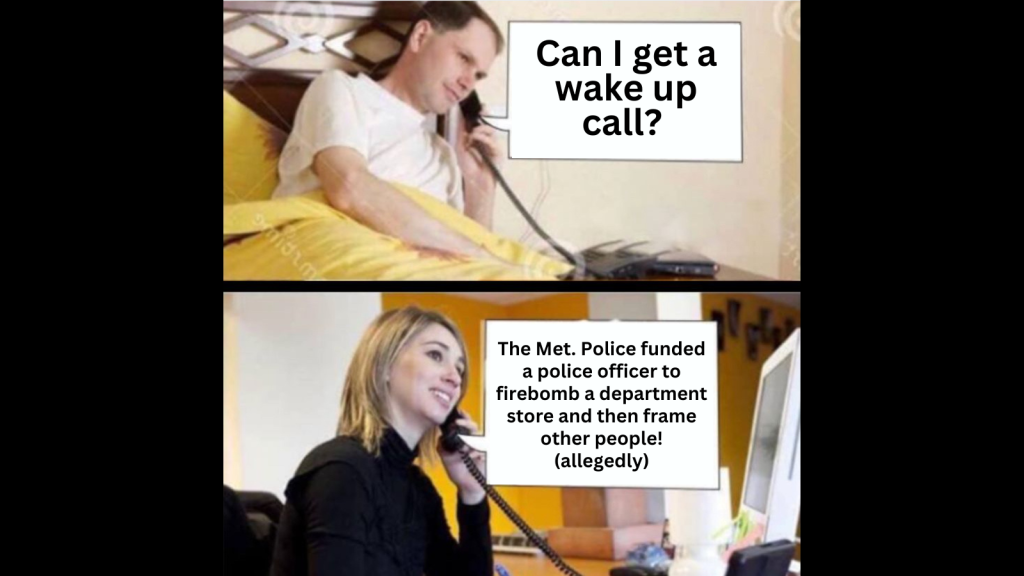
PILC Director, Paul Heron, analyses Bob Lambert's seven days' of evidence in the UCPI, highlighting that "I don't recall" seems to be his go-to phrase.
Bob Lambert, also known by his alias ‘Rob Robinson,’ is one of the most controversial figures to emerge from the world of undercover political policing in the UK. He is a former member of the Special Demonstrations Squad (SDS). This was a squad that was established by the Metropolitan Police Service (MPS) to infiltrate environmental groups, socialist parties, animal rights groups and to spy on social justice activists. Upwards of 1000 groups were monitored and spied upon during the course of its existence.
Bob Lambert’s covert activities have left a legacy of allegations and scandal. They have sparking outrage among activists, campaigners, and victims alike. They continued a trend that was developing in the SDS of state sponsored surveillance that encouraged officers to not only infiltrate groups, but to engage in deceptive realtionships with women a tactic that was used as early as the 1970's.
Operating in the 1980s as an undercover officer (UCO), Lambert infiltrated a range of activist groups, particularly targeting the animal rights movement. His actions raise serious legal questions. It also raises questions about how the British state attempts to control the democratic right to protest.
Bob Lambert gave nearly 7 days worth of evidence to Tranche 2 of the Undercover Policing Inquiry further to his activities in the 1980’s. It was hard viewing, but particularly those affected by his deployment. When it finally came to giving evidence and when asked questions he found it “…hard to recall” any details. In an article in The Guardian, (11th December 2024) Alison an activist from Spies Out of Lives provided a damning assessment of Lambert’s evidence, she wrote:
“I have attended in person as many hearings of the inquiry as possible, and those of the past fortnight have been among the most shocking. We have heard from Jacqui and Belinda, two of the women Lambert deceived into relationships. We have also heard from Helen Steel, about whom Lambert reported extensively, preparing the ground for her to become the target for another abusive sexual relationship, this time with John Dines (known to Helen as John Barker).
All of these women presented the inquiry with frank accounts supported by evidence. Watching from the public gallery, I felt proud of them for their integrity and for the courageous part they have played in exposing this misogynistic policing scandal.
Lambert’s testimony could not have been more of a contrast. Where the women spoke with conversational fluency, he paused, deliberated and hesitated over every word. Where they remembered places, people, meetings, parties and actions, he could “not recall” almost anything about a career for which he has been highly commended. Where they provided written and photographic evidence to back up their accounts, he provided nothing. And where they answered direct questions with direct answers, he offered verbal meanderings, taking his listeners down, around and back up the garden path – anything to avoid a simple, incriminating “yes” or “no”.”
Infiltration of Animal Rights Groups
As a UCO with the SDS, Bob Lambert’s primary assignment was to infiltrate the animal rights movement. Operating under the assumed name of ‘Rob Robinson,’ he became a trusted member of various groups, including the Animal Liberation Front (ALF). These groups were known for their willingness to engage in campaigning direct action to stop animal cruelty. Lambert’s mission was to gather intelligence on their activities and disrupt their operations from within. However, compelling evidence from activists have been made that far from disruption, Bob Lambert actively encouraged, participated and to lead the activities.
For instance one of Bob Lambert’s most notable actions was his role in the campaign against McDonald’s. He is believed to have contributed to the campaigning leaflet, ‘What’s wrong with McDonalds?’ The distribution of the leaflet lead to two activists Helen Steel and Dave Morris being sued for libel by the multi-national. The leaflet that Bob Lambert contributed to formed the basis of the McLibel trial, one of the longest-running legal cases in British history. The leaflet accused McDonald’s of exploiting workers, harming the environment, and perpetuating animal cruelty. While the campaigners faced legal repercussions, Lambert’s undercover role in the affair has now only come to light.
Allegations of Involvement in Arson
Among the most serious accusations against Bob Lambert is his alleged involvement in a fire bombing campaign. Five witnesses have asserted that Bob Lambert played a role in the arson attacks on Debenhams department stores in 1987. These attacks were motivated by Debenhams’ continued insistence of the sale of fur products. While Bob Lambert denies any involvement, given the witness testimonies of 5 people is it really plausible that he was not involved?
If these allegations are true, Bob Lambert’s participation in criminal acts would not only mark a significant breach of the legal boundaries of a serving police officer, it would raise serious questions about the oversight, accountability and ultimately the actions that were encouraged by these undercover police operations not only by management but by the British government.
Deception and Relationships
Bob Lambert’s undercover operations were not limited to intelligence gathering. Over the course of his five years embedded within activist groups he engaged in at least four intimate relationships with women who were unaware of his true identity. One of these women, known as ‘Jacqui’ had a baby with Bob Lambert. She was completely unaware that he was a police officer. After fathering a son with her, Bob Lambert disappeared, leaving Jacqui and her child to grapple with the emotional fallout of his deception.
The use of intimate relationships by UCOs has been widely condemned as a violation of human rights and ultimately an abuse of power. Victims of such practices have described feelings of betrayal, trauma, and a loss of trust in authority. Lambert’s actions exemplify the deeply personal harm caused by such strategies, which were sanctioned by his superiors within the SDS, or at the very least SDS managers turned a blind eye to them.
A Poisoned Legacy
Bob Lambert’s activities as a spycop have made him a symbol of the failings of undercover policing in the UK. His actions, particularly the allegations of involvement in arson and his exploitation of personal relationships, have appalled ordinary people. Bob Lambert’s activities will once again contribute to demands for full and proper accountability of the police and in particular the Metropolitan Police. This clearly cannot go on!
From the McLibel case, to the allegations of involvement in arson, and to the personal harm caused to the individuals he deceived paint a damning picture of Lambert’s tenure as an undercover officer. These actions cannot be justified on national security and public order grounds – indeed the ethical and legal breaches by this officer cannot be ignored.
The Road Ahead
The ongoing scrutiny of Lambert’s activities underscores the need for greater transparency and accountability not just in undercover policing, but the impact and failure of MPS managers. In addition there are questions to be asked about the role and knowledge of these actions by Bob Lambert, what did the Security Service know, senior civil servants and Government Ministers?
As the revelations about Bob Lambert continue to emerge, they serve as a stark reminder of the sanctioned abuse by the British state.
Bob Lambert is due to give evidence in early 2025 for his role as a manager of the SDS during the 1990’s. The Public Interest Law Centre will be representing several Core Participants and witnesses.
We will not rest until we see a fairer and more equitable society.
Make a donation today to support our work:
More ways to give


244-254 Cambridge Heath Road London E2 9DA
Phone: 0203 559 6342
Contact us
© Public Interest Law Centre
Charitable Incorporated Organisation in England & Wales - no: 1192355
Registered office: 244-254 Cambridge Heath Road, London, E2 9DA