

News
Public Inquiries
October 20, 2026
Covid-19 Inquiry recognises financial support for care workers would have saved lives but fails to recognise heavy toll on migrant care workers
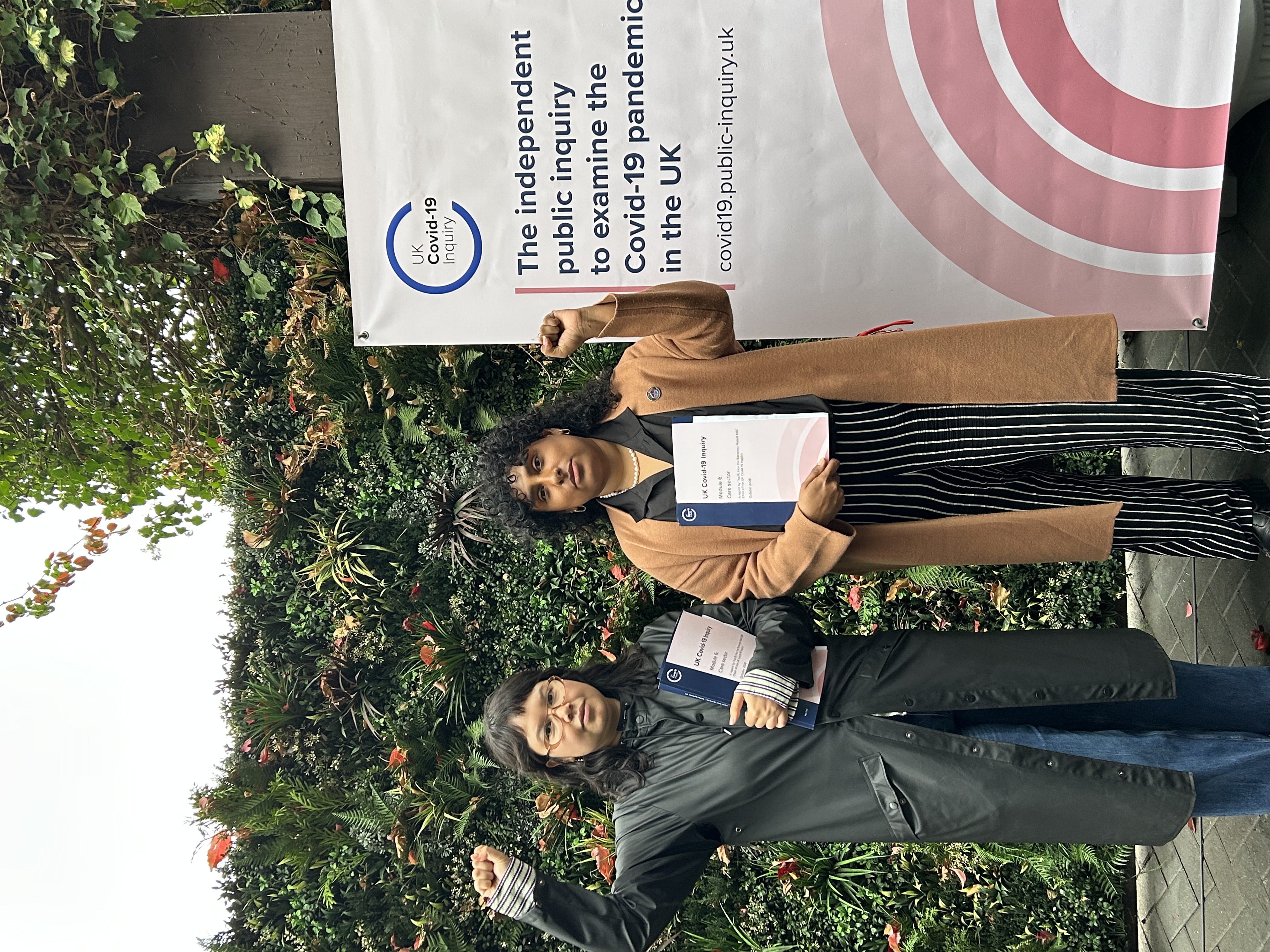
At 12pm today, 20 October 2026, the UK COVID-19 Inquiry published its Module 6 report on the care sector.
The Inquiry accurately identifies a wide range of issues within the care sector, including its piecemeal nature, massive data gaps that pose immense health risks, and the fact that care workers were unheard and unseen at the height of the pandemic. However, the Inquiry ultimately fails to recognise some of the key underlying causes: the disproportionate impact on migrant workers, who play an indispensable yet ignored role in the sector, as well as a for-profit care model that worsens working conditions, particularly for migrant care or domestic workers with precarious immigration status.
While we welcome the Inquiry’s specific recognition of our important evidence on the chilling effect that insecurity of immigration status has on care workers, overall, the report relies upon evidence brought forward by migrant care workers without explicitly naming or recognising them.
Background
The Public Interest Law Centre (PILC) represents the Frontline Migrant Health Workers Group (FMHWG), a representative grouping of organisations composed of Kanlungan Migrant Centre (formerly Kanlungan Filipino Consortium), a migrant-led UK charity supporting Filipino and other East and Southeast Asian (ESEA) migrants, and two trade unions, United Voices of the World (UVW) and Independent Workers’ Union of Great Britain (IWGB).
At the Module 6 public hearings in June and July 2025, FMHWG sought to platform the voices of precariously employed workers in a range of roles across the social care sector and highlighted the disproportionate impact the pandemic had on them due to oppressive immigration policies, the profit-driven nature of a privatised and fragmented care sector, and unsafe, exploitative working conditions.
FMHWG’s evidence and recommendations
FMHWG’s evidence focused on three interrelated themes: (1) the marketisation of care is dangerous for both service users and exploited workers; (2) the Hostile Environment policy forces/exploits precarious employment and leads to dangerous conditions, to everyone’s detriment; and (3) existing regulatory bodies and oversight mechanisms are unfit for purpose.
Following on from this evidence, our final submissions to the Inquiry sought recommendations regarding:
1. Rates and availability of sick pay reflective of normal working wages for anyone in the adult social care sector, irrespective of immigration status;
2. Implementation of restrictions on data-sharing between public bodies focused on public health and the Home Office to rebuild migrants’ trust in institutions;
3. Removing or lowering fees for in-country visa variation applications to move place of work or employer, allowing workers to challenge exploitative conditions;
4. Implementation of a centralised national oversight body charged with implementing national care quality standards;
5. Addressing the sector’s data gaps in a manner attuned to the needs of our migrant workforce, rebuilding trust after decades of hostile immigration policy;
6. Acknowledging the vital work and sacrifices of migrant workers during the pandemic, whilst acknowledging that recognition is important yet insufficient.
Module 6’s findings and omissions
The Inquiry accurately identifies a wide range of issues within the care sector, including its piecemeal nature, as well as massive data gaps that make regulation and oversight incredibly difficult. Relatedly, the report also confirms the government’s fundamental lack of understanding of the sector.
We welcome the recognition that workers needing to self-isolate should not suffer financial loss, which on current arrangements would mean receiving full sick pay. We are also pleased to see that the Inquiry specifically recognises our important evidence on the chilling effect that insecurity of immigration status has on care workers. Fear of compromising their right to work in the UK, and therefore their status, impeded migrant workers’ ability to self-isolate and meant they did not seek out mental health support or the support of statutory services.
The report places a large emphasis on the importance of a register of care workers, and we are glad that they take into account our evidence on how immigration status would be a disincentive to some registering or entering the sector. This could be devastating to the sector, given its proven reliance on migrant workers to supplement the workforce.
However, disappointingly, the key role of migrants in the care sector is not adequately recognised in this report. From the report emerges an obvious but unspoken pattern: from euphemistic references to workers on zero-hour contracts and missing data on the ethnicity of reported deaths, to a lack of understanding of why some care workers had to continue to work under unsafe conditions, the report skirts around crucial evidence FMHWG provided on the particular experiences of migrant care workers. For example, it completely fails to acknowledge the work undertaken by domestic workers, who faced some of the most precarious conditions related to worker protections and PPE.
The report also misses a crucial opportunity to call out the impact of the for-profit care model on care workers whose visas are tied to exploitative or abusive employers. FMHWG’s evidence highlighted the relationship between tied visas and the inability to self-isolate and report or leave unsafe working conditions. As we set out in our opening submissions: “Business models dependent on artificially cheap and insecure labour have no place in a resilient care sector.”
Concluding remarks
In response to the Inquiry’s findings, PILC solicitor Alisha McSporran states:
“Through their engagement with this Inquiry, FWHWG have succeeded in placing on public record the indispensable role played by migrant care and domestic workers during the pandemic. Our clients provided deeply impactful and valuable testimony and submissions. Thanks to their participation, the crucial, yet too often overlooked, work of some of the most marginalised members of the care sector has been made more visible. Despite the Inquiry’s recommendations painting an incomplete picture of the care sector, we remain hopeful that our clients’ testimony will turn into policy and legislative change.”
Andrea Martinez, Kanlungan’s Director states:
“We are pleased to see the impact of the evidence we have presented for Module 6, including the potential deterrent impact of a national care register on migrants with insecure immigration status.
However, we are disappointed in the Covid-19 Inquiry's lack of recognition for the specific experiences of migrant care and domestic workers — and their role in keeping adult social care afloat at the height of the pandemic, which has been recognised as fragile by the Chair. Our members, often working in private homes, filled in the gaps in care provision left by the state due to widespread privatisation and austerity. Reinvesting in social care and recognising domestic work as work are essential to preparing for the next pandemic. Our evidence pointed to the harmful consequences of prioritising immigration enforcement over workers' rights and welfare of those in care.
This exclusion echoes current Government policy and its scapegoating of migrant care work visas to make the argument for tougher borders. This is particularly painful given the key role of migrant care workers to fill in gaps in the social care workforce when it was most needed.
Kanlungan will continue to fight for migrant workers' rights — demanding fair pay, safe working conditions, and an end to the Hostile Environment.
Nelly Ospino, General Secretary of UVW states:
“By failing to address the disproportionate impact of the pandemic on migrant care workers, the Inquiry risks repeating the very injustice it was established to expose. Care workers came forward despite the emotional toll and trauma of reliving their experiences, hoping their testimonies would lead to meaningful change. To overlook their voices is a devastating wasted opportunity.
Our members, predominantly low-paid migrant workers from Black and brown communities, cared for vulnerable residents and kept the care sector running, yet were too often abandoned to unsafe conditions, poverty pay and the inequalities of an outsourced system. Some of our members were even forced to source and make their own personal protective equipment (PPE) because adequate protection was not provided. Those who risked their lives to care for others were left to fend for themselves. Immigration status has made many even more vulnerable to exploitation and afraid to challenge abuse.
This is a deeply disappointing outcome. UVW will continue fighting for decent pay, safe working conditions, direct employment and a firewall between workers’ rights and immigration enforcement. Care workers deserve dignity, protection and justice — and when migrant workers rise, we all rise.”
Ultimately, this report should serve as a reminder of the huge debt of thanks owed to migrant care and domestic workers, including the 78,000 migrant care workers brought into the workforce back in 2022/23 to bail out the country amidst serious labour shortages. This should be at the forefront of the minds of policy makers as they seek to reform the care sector and draft immigration policy. Finally, we hope FMHWG’s evidence informs the ongoing Casey Commission on adult social care, where the government has another opportunity to ensure that recommendations for sector reform are adequately informed by the experiences of migrant care and domestic workers.
Media enquiries: media@pilc.org.uk
We will not rest until we see a fairer and more equitable society.
Make a donation today to support our work:
More ways to give


244-254 Cambridge Heath Road London E2 9DA
Phone: 0203 559 6342
Contact us
© Public Interest Law Centre
Charitable Incorporated Organisation in England & Wales - no: 1192355
Registered office: 244-254 Cambridge Heath Road, London, E2 9DA