

News
Open Spaces Project
November 10, 2025
House of Lords defends public recreational trusts
There was a lively debate in the House of Lords last week on the Planning and Infrastructure Bill, with members robustly defending the importance of public trusts for recreational use of land and ensuring the public’s rights aren’t retrospectively taken away without consultation by a proposed amendment.
The amendment was introduced by Lord Banner and would have removed the public trust over recreational land in circumstances where the land was sold by local councils without public consultation, in breach of the requirements of the Local Government Act 1972. The amendment would have had retrospective effect. The amendment follows a Supreme Court case in which the Court decided public trusts for recreational use of land continue to exist over land where that land was sold in breach of the statutory requirements.
The existence of public trusts has real-world consequences. In Lord Banner’s view, they continue “to frustrate the beneficial repurposing or redevelopment of the land in question”. But as Baroness Bennett said: “beneficial repurposing is…often in the eye of the beholder”.
The local community in Wimbledon is involved in a dispute with the All England Lawn Tennis Club over the expansion of the Wimbledon tennis tournament grounds. The proposed development land was part of the Wimbledon Park Open Space, which was sold by the local authority to the AELTC in 1993 without public consultation, and with both parties assuring the public at the time that there would be no development, covenanting that the land would not be used except for leisure, recreation and open space.
According to Lord Banner, Wimbledon Park is far from the only example: the uncertainty created by public trusts over former public land is holding up “many developments across the country”.
This begs the question: why have all these public open spaces been sold?
The government has created a “builders vs blockers” narrative, which has characterised any resistance to development as “nimbyism”. But the figures and examples given in the debate show that community concerns about development are often well founded.
As it is, communities have few defences against the sale of public open space. All local authorities need to do to sell open space is carry out a 2-week consultation and “consider” the objections. These weak protections, a product of liberalisation of public land sales in the 1980s, have resulted in “the new enclosure”. According to the House of Lords debate, from the late 1970s to 2019, 10% of former public land in Britain has been transferred into private hands, representing 2 million hectares of land.
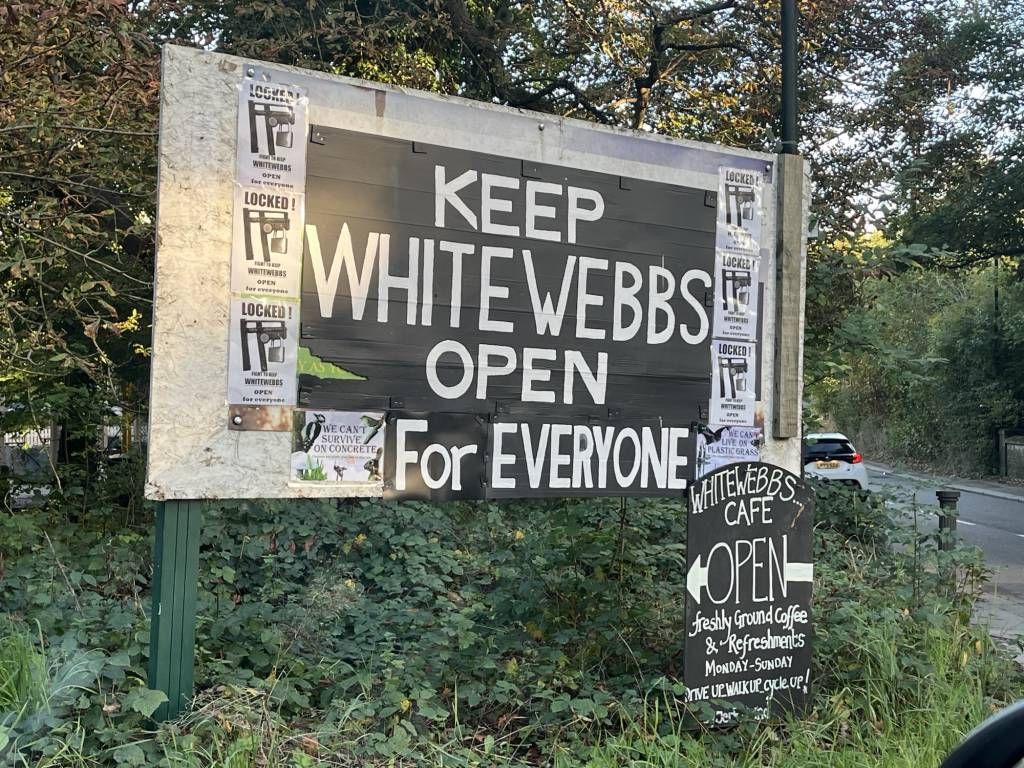
It is still happening today: the London Borough of Enfield is in the process of disposing of some 53 hectares of public open space to private interests. The development of Whitewebbs Park by a private company, which would enclose a large part of it and remove the public’s statutory right of access, was approved by the local authority and nodded through by the Mayor of London and Secretary of State. It is being challenged by campaigners.
There are very good reasons why communities want to protect public open spaces from development. They are vital for engendering a sense of community and tackling inequality relating to access to nature and health. Deriding community activists who campaign to protect these spaces as blockers is not the answer.
Members spoke forcefully against the amendment, which would have effectively removed any consequences when local authorities sell public recreational land without consultation. It was positive to see some thoughtful contributions on how the issue of historic land sales without consultation might be addressed, and the idea of alternative provision raised, such as the following from Baroness Hodgson:
In situations where such a purchase will mean that the public’s rights of enjoyment will not be maintained, surely there should at least be extensive consultation with local communities, with their views taken into account, and where there is strong objection, surely at the very least some alternative provision should be made.
Sadly, the public’s rights of enjoyment are being lost all too frequently. Stronger protections are needed, but at least this attempt to weaken them did not prevail.
When public space near you is threatened, it can be hard to know how to fight back. There’s no widely available legal advice in this area. It can feel like the local authority holds all the cards and your community has no say.
PILC aims to bring greater accountability and transparency to local authority decision-making around the disposal of public open spaces. By shining a light on their processes, we aim to make sure that the public can continue to access open spaces.
If a public space near you is threatened, message harriet.child@pilc.org.uk
We will not rest until we see a fairer and more equitable society.
Make a donation today to support our work:
More ways to give


244-254 Cambridge Heath Road London E2 9DA
Phone: 0203 559 6342
Contact us
© Public Interest Law Centre
Charitable Incorporated Organisation in England & Wales - no: 1192355
Registered office: 244-254 Cambridge Heath Road, London, E2 9DA