

News
Gentrification
January 22, 2025
PILC's Legal Challenge to Lambeth Council
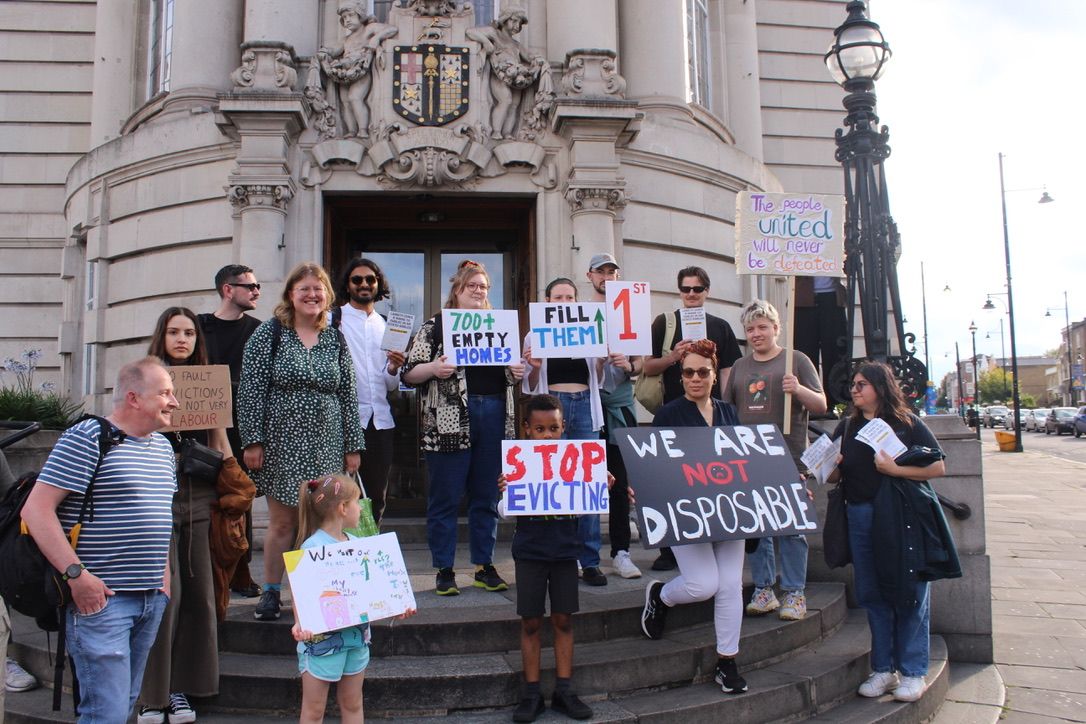
Lambeth Council taken to High Court over letting council properties on the private market
A private resident of Central Hill estate in south London issued a claim for Judicial Review on 18 December 2024 against Lambeth Council. This person is one of potentially hundreds of tenants facing eviction across 5 Lambeth estates that are earmarked for demolition.[1]
On 15th October 2024, Lambeth Council decided to “return to the council (with vacant possession) of properties currently leased to [Homes for Lambeth]”. In other words, the council is evicting tenants of a private corporate landlord that was created and is owned by Lambeth Council.
The campaigners that PILC are supporting say many of those private renters being made homeless will now have to seek housing from the same council which is evicting them.
The case argues that the basis of this decision is unlawful: Lambeth Council should not have been renting homes in the private rented sector under notoriously insecure assured shorthold tenancies (ASTs). The Claimant is arguing that Lambeth council, not HfL Living Ltd, is their landlord.
Background
To bring about their estate regeneration programme, Lambeth Council created Homes for Lambeth Group Limited, a company whose sole shareholder is Lambeth Council. This company then contains 4 subsidiaries, including Homes for Lambeth Living Ltd (‘HfL Living’).
Lambeth Council made ‘HfL Living’ to be a private sector corporate landlord who could let council owned properties at market rent. A HfL 2018 business plan shows the council envisaged making a profit via this company:
“…there are also other opportunities such as developing a stock of homes for private rent, with long-term tenancies and rent stability, improving the quality and security of the private sector.”[2]
The Council’s 2024 decision to bring HfL properties back ‘in-house’ – and thereby evict all tenants of those properties – follows a recommendation from a damning report published in 2022, which criticised Lambeth’s overall handling of their regeneration programme. [3]
The Challenge
The Claimant was granted an assured tenancy by HfL at one of these properties in 2019.
Campaigners argue that the decision to now seek vacant possession of these homes was driven by pressure to dissolve HfL rather than a genuine intent to create more housing for those owed a duty by the council.
Despite the control Lambeth Council exercises over HfL, including being a sole shareholder and making determinative decisions for its future, the Council purports that HfL Living is the Claimant’s landlord.
This has resulted in Lambeth Council granting a tenancy they have no power to grant (an assured shorthold tenancies which local authorities can never legally grant) which leaves the Claimant vulnerable to a no-fault eviction under section 21 of the Housing Act.
The legal grounds for the case can be found here.
Lambeth Council have breached the Localism Act 2011 in using HfL to rent homes in the private rented sector and to purportedly grant assured shorthold tenancies.
The council has used the general power and Section 4 of the Localism Act 2011 to create a company acting with a commercial purpose - HfL. However, the Localism Act explicitly prevents a local authority using these powers to do something they are already prohibited from doing in statute: including renting under a assured shorthold tenancy. Further, section 4(4) of the Localism Act 2011 prevents a local authority creating profit where they have existing statutory duties, which they do in respect of housing. Therefore, the decision to rent the Claimant’s home in the private rented sector through HFL Living and granting assured shorthold tenancies is unlawful.
This also invalidates the council’s decision of 15th October 2024 to pursue vacant possession of these homes under section 21 of the Housing Act 1988. This is because the use of section 21 is only permissible for properties occupied by assured shorthold tenants, not secure tenants.
Lambeth council breached of the Housing Act 1985 in treating the Claimant as a) an assured shorthold tenant and in b) refusing to recognise that they are a secure tenant.
The actions of Lambeth Council point towards them being the true landlord. Lambeth Council contend that the Claimant is an assured shorthold tenant. However, a proper application of the law shows that she is in fact a secure tenant of Lambeth Council. The Claimant’s tenancy was not obtained through the council’s homeless duties and is therefore not considered "temporary accommodation" under Part 7 of the Housing Act 1996. Part 1, Schedule 1, paragraph 12 of the Housing Act 1988 prohibits the council from issuing assured shorthold tenancies.
Why is this important?
Lambeth Council claims it wants to use these homes for those with “the most urgent housing need”. Yet, the council fails to consider that this is precisely who HfL Tenants will become if the council evicts them. Tenants include families with children, pregnant and disabled people, dependents and carers, most of whom are deeply embedded in their communities.
“The community we have built will be shattered by the council's callous decision to evict them”
Lambeth Council insists that, as private renters, HfL Tenants will simply be able to move elsewhere, yet that assumption appears to be incorrect. HfL Tenants’ properties already constitute the cheapest ‘private’ rent housing in the borough. Moreover, the end of a privately rented tenancy remains one of the leading drivers of homelessness in England.[4] Hence, evicting HfL Tenants would only exacerbate the housing crisis in the borough. Not to mention, there are already hundreds of council-owned empty homes on the five affected estates, many of which have been empty for years.
As one HfL Tenant states: “None of us were told we were renting from the council, or that Lambeth saw it as a short-term solution. On the contrary, we asked and were assured we’d be able to stay here long-term. This decision seems hypocritical as it’s going directly against Labour’s promise to ban Section 21 evictions, and Lambeth is a Labour-led council.”
A claim has been filed / issued with the High Court / Administrative Court in London.
A judge will now review the resident's arguments and decide whether the case should proceed to a full hearing.
Lambeth have until 5 February 2025 to respond to the Claim.
PILC solicitor Alexandra Goldenberg, who represent the Claimant states:
“Lambeth's decision to rent these properties on the private market is unlawful and has created a devastating impact on hundreds of residents across the borough who have been evicted or are facing eviction. This is yet another chapter in a troubling history of estate ‘regeneration’ schemes that have disregarded the rights of residents and communities. It is time for Lambeth to take responsibility and do the right thing, starting with an immediate halt to all evictions”
The Campaign has been featured in national news outlet and in a recent House of Commons debate (14th January 2025). Watch a clip here:
___________________________________________________________________________________
The Claimant is represented by Alexandra Goldenberg and Saskia O’Hara of the Public Interest Law Centre, and Stephanie Harrison KC and Matthew Ahluwalia of Garden Court Chambers.
[1] https://www.bigissue.com/news/housing/renters-london-lambeth-council-homeless-no-fault-eviction/
[2] Homes for Lambeth Business plan 2019-2020
[3] The Kerslake Review, 2022, commissioned by Lambeth Council
[4] Statutory homelessness in England: financial year 2023-24
We will not rest until we see a fairer and more equitable society.
Make a donation today to support our work:
More ways to give


244-254 Cambridge Heath Road London E2 9DA
Phone: 0203 559 6342
Contact us
© Public Interest Law Centre
Charitable Incorporated Organisation in England & Wales - no: 1192355
Registered office: 244-254 Cambridge Heath Road, London, E2 9DA