

News
February 23, 2025
Press Freedom and the British Justice System
UCL hosted their annual Law Privacy lecture on 12 February 2025 with investigative journalists Trevor Birney and Barry McCaffrey about their fight for press freedom. PILC were in attendance and the following is a write up on the case.
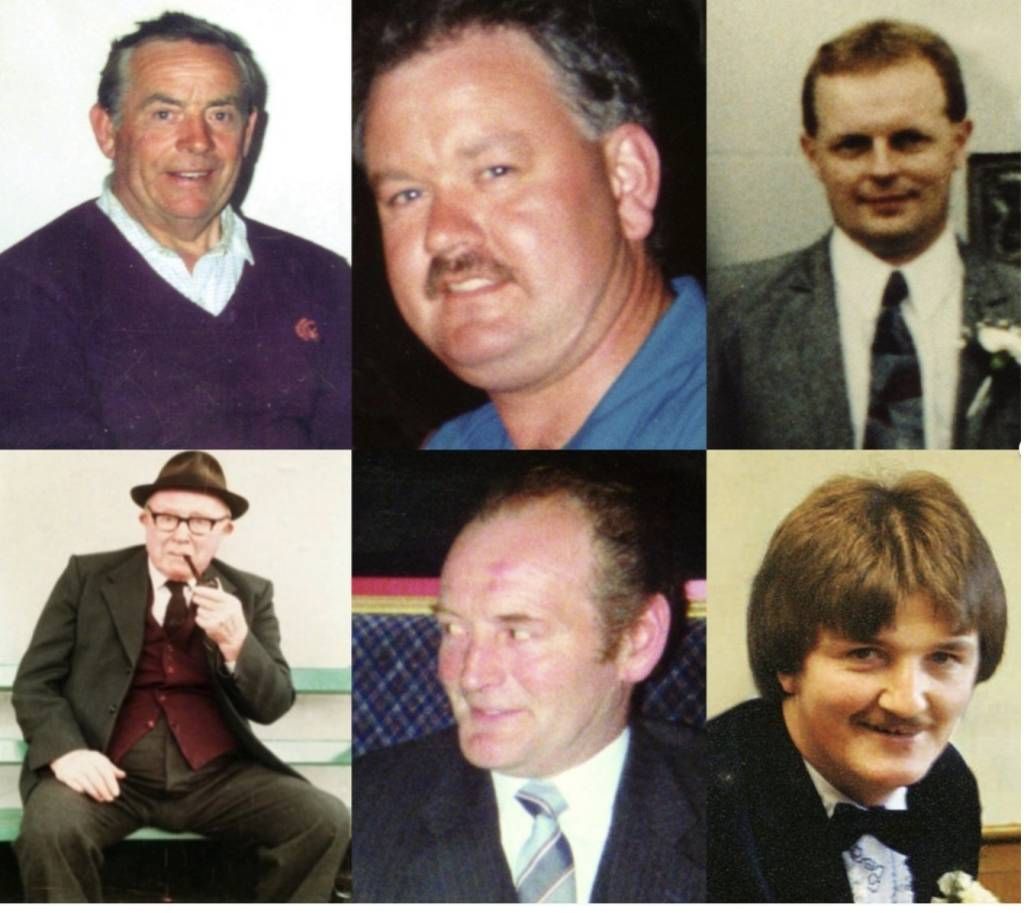
The Loughinisland victims were Adrian Rogan, Malcolm Jenkinson, Barney Green, Daniel McCreanor, Patrick O’Hare and Eamon Byrne.
Background
On 18 June 1994, a small rural pub in Loughinisland became the site of a massacre during the Italy-Ireland World Cup match. Masked gunmen from loyalist paramilitary group, the Ulster Volunteer Force (UVF), entered O’Toole’s bar killing six Catholic civilians and wounding five. The whole community was affected by the indiscriminate murders that happened simply because it was deemed a ‘nationalist’ bar.
In the immediate aftermath of the murders, the police repeated that ‘no stone would be left unturned to find the killers.’ However, rather than investigate the atrocity, the families were lied to by state bodies for decades and it was journalists who were targeted not the murder suspects. No convictions were ever made.
Police Ombudsman
After the signing of the Good Friday Agreement in 1998, the Police Ombudsman for Northern Ireland was set up to investigate the police’s actions during the euphemistically named ‘Troubles.’ In 2006, the families of the Loughinisland victims lodged an official complaint with the ombudsman after they were told that at least one of the killers was an agent of security forces. They also had information that the getaway car had been destroyed by the police ten months after the murders.
When the much-anticipated report that had been delayed considerably under the sitting ombudsman Al Hutchinson was finally released in 2011, the families and wider community branded a whitewash. The Criminal Justice Inspectorate (CJI), headed by Michael Maguire, condemned the report and indicated the ombudsman was compromised due to a ‘lowering of independence’ in the office, finding ‘major inconsistencies’ with it. Criticism from within the ombudsman office alongside public outrage resulted in Hutchinson leaving the role.
In 2012, Hutchinson was replaced by Maguire who assured families he would overturn the report which was quashed by the Belfast High Court later that year. In 2016, Maguire’s findings included that State collusion was a ‘significant feature’ in the Loughinisland Massacre, with the original investigation marked by ‘incompetence, indifference and neglect.’ Worse still, ‘despite being implicated by intelligence’ of names and known suspects, no loyalist paramilitaries were investigated about the murders by the police. Despite progress on the admission of collusion, the second report also failed to result in any prosecutions.[1]
Journalism is not a crime
Two Belfast-based journalists, Barry McCaffrey and Trevor Birney, who were investigating the case and determined to uncover the truth denied to the community by state bodies, were soon thrust into a legal fight for press freedom. Their encounter with the justice system ended 30 years after the massacre and exposed the lengths the British State was prepared take to cover up not just the details of the murders, but the unlawful actions the police systemically took since then to protect the murderers and criminalise journalists.
Trevor and Barry’s battle with the British Courts came about when they were suddenly arrested in 2018 by the PSNI and Durham Constabulary after their award-winning film ‘No Stone Unturned’ premiered. The documentary detailed the alleged collusion between the police and loyalist paramilitaries in the Loughinisland Massacre and named the suspects. Six months before the film was released, Trevor met with the PSNI and handed over the names of the suspects and told the police they would be named in the documentary. He was thanked for the information and sent on his way.
Yet, after the premier, the PSNI went after the two journalists. While the PSNI did interview the chief suspect after the documentary was premiered, it was only so that he could give evidence that the film had caused him harm not about his his role in the massacre.
Barry and Trevor were told they had breached the Official Secrets Act and put someone’s life in danger – that is to say, by exposing the truth, they put a risk to the safety of the murderers. This blatant failure of accountability set them on a path to expose the historic and ongoing attempts by state bodies to silence, criminalise and intimidate journalists, filmmakers, lawyers and activists.
‘Winning’ at Judicial Review
Their film investigated a matter of huge significance, and they were determined to protect their sources. During their arrest, their houses had been raided and their phones and laptops taken. When they were released on bail later that evening they were unaware that the PSNI were mounting a secret surveillance operation to rearrest them. Before being released, they had managed to secure an interim injunction against the PSNI who were not permitted to look at the contents of the laptops and phones until it was heard at a Judicial Review. This gamble came at a significant risk – particularly as this was unprecedented - but with only 3% of the content on the devices relating to the film, it was a risk that Trevor and Barry felt they had to make.
The following year at the High Court, Trevor and Barry won substantial damages over the arrest which was deemed to be ‘inappropriate’, and a return of all seized material. It was found that the PSNI misled the courts to get the warrants for Trevor and Barry’s arrest in the first place.
However, Barry and Trevor remained dissatisfied with the unjustified attempts of the police to uncover their sources especially as the key suspect was given preferential treatment by the police, to the detriment of those seeking the truth. It
Families still speak of finding out the ‘truth’ because ‘justice’ is long gone.
Barry McCaffery
The pair therefore decided to lodge a complaint with the Investigatory Powers Tribunal (IPT) to find out what surveillance the PSNI had put them under and under what justification. This is the only British court allowed to investigate the activities of M15, GCHQ and police intelligence agencies. Barry offered that as only 1% of the 4,073 IPT cases against various intelligence agencies were found in favour of complainants, they did not hold much hope.
Investigatory Powers Tribunal
Trevor admitted that he had pretty much forgotten about the complaint when four years later they finally heard back from the IPT that there was a case to answer to. In December 2024, the IPT ruled that the PSNI and the Metropolitan Police had acted unlawfully by covert surveillance. The landmark judgment also saw the PSNI admit that in the 14 years prior, it had applied for the phone records of an additional 323 local journalists and 500 lawyers.
Among the disclosures at the Tribunal, it was revealed that Barry had been spied on at least four times since 2009, with the IPT ruling that three of those operations were unlawful. With regards to the surveillance operation mounted after they were released on bail, the IPT found that this was also unlawful targeting of the media. The police knew they wouldn’t be granted Directed Surveillance Authority (DSA) after their release because the legal protections of journalists and their source. Instead, the PSNI applied for a DSA against the Police Ombudsman’s office, who they suspected was their source. It was a clear and unlawful decision by the PSNI to identify journalistic sources.
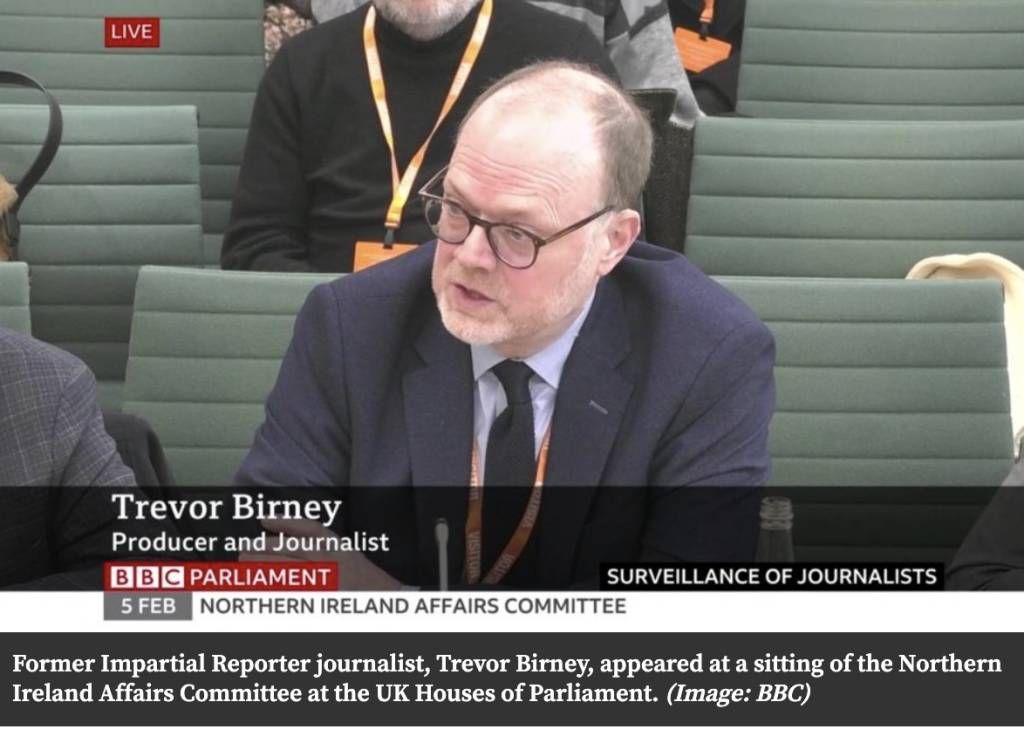
The IPT’s findings are the first time a police force has been found guilty of trying to do this – which Barry added ‘despite their efforts…they were still unable to identify our sources.’
The IPT also uncovered that the Met Police had phone data collection against Barry, Trevor and 14 other journalists including at the BBC. The largest British police force was found to be spying on the national broadcaster so there was a unanimous murmur in the room as to why so few people in Britain know about this case.
“We wish to make it clear, however, that on the basis of the material that has been provided to us we see no overriding requirement in the public interest which could have justified an interference with the protection of journalistic sources in this case.” IPT December 2024
Conclusion
Independent journalism is seriously under threat, leading both on a journey to clear their name and expose how public funds and resources were funnelled into covert surveillance operations to silence and intimidate journalists, rather than to uncover the truth and target the killers of a bloody massacre. The PSNI and Met Police have been found to routinely and unlawfully surveillance journalists and lawyers – turning them in to suspects to justify lifting phone data when they make a simple inquiry.
While Trevor and Barry won their case at the IPT and have been incredibly resilient in the face of significant repression, they said that unless there is a Public Inquiry that exposes the extent of police spying and surveillance across Britain and Ireland, that they will not back down in the fight for the truth.
[1] The force who promised 'no stone would unturned' were found by Maguire to have had:
a) details of the suspects – including a police informant - but delays in arrests resulted in lost evidential opportunities;
b) intelligence on the activities of loyalist paramilitaries they did not pass on to protect informants and undermine investigations;
c) a rag discarded from a vehicle on the night of the massacre that was submitted for examination but never found in evidence;
c) information that members of the gang which officers had reason to believe were responsible for Loughinisland were given advance warning of their potential arrests from inside the police force;
d) continued to work with an informant who had a role the attack for a number of years; and withheld information to detectives in loyalist killings from 1993 onwards.
We will not rest until we see a fairer and more equitable society.
Make a donation today to support our work:
More ways to give


244-254 Cambridge Heath Road London E2 9DA
Phone: 0203 559 6342
Contact us
© Public Interest Law Centre
Charitable Incorporated Organisation in England & Wales - no: 1192355
Registered office: 244-254 Cambridge Heath Road, London, E2 9DA